- Home
- »
- Blog
- »
- Symbols and signs within the fan community constitute a powerful language of visual communication
Symbols and signs within the fan community constitute a powerful language of visual communication

The use of symbols and signs amongst supporters forms the basis of fan subculture, helping to express identity, support the team and demonstrate unity. This symbolism creates a unique visual and verbal space in the stands and beyond. For further information on signs and symbols, please visit the website Signs.
Modern fan culture is gradually becoming more organised. Many supporters’ groups independently monitor the content of their symbols, striving to maintain a vibrant atmosphere of support without breaching the law or sporting regulations.
Symbols and signs help to foster a sense of unity, preserve the club’s traditions, make supporting the team more spectacular, and allow fans to express their loyalty in a clear and recognisable way, whilst remaining within the rules and showing respect for those around them.
Main categories of fan merchandise
Fan merchandise comprises a wide range of items that help supporters emphasise their affiliation with their favourite club, express support for the team and create a special atmosphere in the stadium. Many of these symbols are recognisable far beyond the confines of sporting arenas and form an important part of fan culture.
Official club symbols include the team crest, team colours, the logo, the mascot and other elements of visual identity. These are used in stadium design and in the production of souvenirs and merchandise. Supporters wear T-shirts, scarves, caps and other clothing featuring the club’s symbols, thereby demonstrating their loyalty to the team.
Fan merchandise is created by the supporters themselves or by supporters’ groups. This includes banners, flags, pennants, banners, stickers, patches and badges. Many of these items have their own history and are created to commemorate memorable matches, club anniversaries, legendary players or significant events. Such symbols help to preserve traditions and highlight the distinctive characteristics of a particular fan community.
Colour schemes form a separate category. For supporters, a combination of certain colours is often just as important as the club’s logo. You only need to see someone wearing a scarf or jacket in the club’s colours to know which team they support.
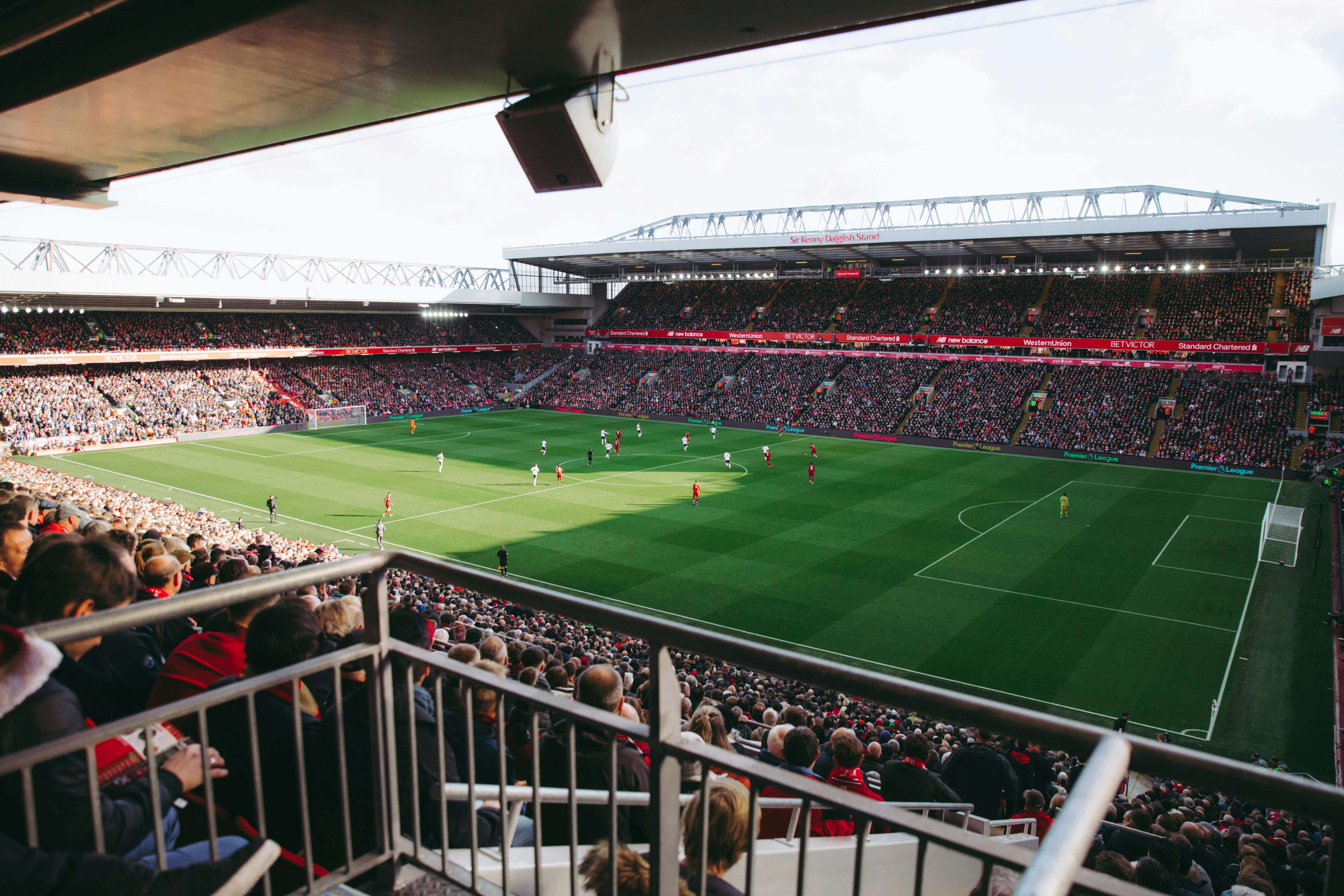
The visual design of the stands holds a special place. During important matches, fans organise large-scale displays using huge banners, cards, flags and placards. Such displays require serious preparation and create a spectacular sight that becomes part of the sporting celebration.
NOTE! There are commemorative and anniversary symbols dedicated to the club’s achievements, famous players, managers or historic victories. They are used for a limited time, but often become part of the tradition and continue to appear at matches many years later.
Gestures and verbal chants
Fan culture consists of more than just flags, scarves and club merchandise. Gestures, chants, songs and other forms of non-verbal and verbal communication play an equally important role. It is these that create the unique atmosphere in the stadium, unite thousands of people and enable supporters to back the team as a single, united force.
The best-known verbal chants are the chants and slogans. They usually consist of short, easy-to-remember phrases that the whole stand can chant in unison. Such chants help to support the players during the match, lift the spirits of the crowd and put psychological pressure on the opposition. Many clubs have their own traditional chants, which have remained unchanged for decades and are passed down from older generations of supporters to younger fans.
Club anthems and songs have also become an important part of fan culture. They are performed before the start of the match, during half-time or after the final whistle. Singing the anthem together is seen as a symbol of fan unity and an expression of respect for the club’s history. In large stadiums, thousands of voices singing in unison create a special atmosphere that is memorable not only for the spectators but also for the players themselves.
Among non-verbal signals, coordinated gestures hold a special place. For example, supporters may simultaneously raise their club scarves above their heads, clap in unison or perform pre-arranged hand movements. Such actions often form part of large-scale displays and help to create a striking visual accompaniment to the match.
However, not every gesture is universal. The same movements can have different meanings in different countries and cultures. Therefore, organisers of sporting events and supporters’ groups themselves try to use only clear and neutral forms of support, avoiding gestures that might be perceived as offensive, discriminatory or political.
In modern sport, respectful behaviour in the stands is of great importance. Consequently, fans are increasingly focusing on positive support for their own team rather than on taunting the opposition. Group chants, friendly applause and spectacular displays help to create a festive atmosphere that makes a visit to the stadium a memorable experience for everyone involved in the match.
Regulatory and prohibitory signs
Although fan culture is based on the free expression of emotions and support for one’s favourite team, it operates within certain rules. Organisers of sporting events, stadium management and national sports federations set out requirements for the use of team symbols to ensure the safety of spectators and maintain a respectful atmosphere in the stands:
- Regulatory signs can be seen as soon as you enter the stadium. They inform visitors about rules of conduct, directions, the layout of the stands, emergency exits, first-aid points and other important facilities. Such signage helps spectators quickly find their way around the stadium and act appropriately should an emergency arise.
- Prohibition signs remind spectators of actions that are not permitted during a sporting event. Restrictions usually relate to the use of pyrotechnics, bringing in dangerous items, smoking in designated no-smoking areas, entering the pitch and other breaches of public order.
- Fan paraphernalia. Banners, posters, flags and other visual materials must not contain extremist slogans, incitement to violence, hate speech or discrimination. It is also prohibited to use symbols of organisations whose activities are restricted or prohibited by the legislation of the relevant country.
- Many sports leagues have specific regulations governing the appearance of the stands. For example, there may be restrictions on the size of banners, how they are displayed, or the use of long flagpoles if these pose a safety risk to spectators. Certain types of fan paraphernalia are only permitted following prior approval from the stadium management.
PLEASE NOTE! The rules of conduct for the supporters themselves are also important. Competition organisers urge supporters to support their team respectfully, avoiding offensive chants, provocative gestures and any actions likely to lead to conflict.
Modern fan culture is gradually becoming more responsible. Most supporters’ groups are keen to maintain a vibrant atmosphere in the stands without breaching the rules in force. This is precisely why regulatory and prohibitory signs are seen not as a restriction on freedom, but as a tool for making sporting events safe, comfortable and entertaining for all those involved.


 Almere City
 Athletic Club
 Bayer 04 Leverkusen
 Bordeaux
 Anderlecht
 Formula 1 News
Westhamfcnews.com
Visit Westhamfcnews.com for your daily news, standings, statistics and more about West Ham United from London. Stay up to date with the latest West Ham United transfers and view the live scores during West Ham United games.